
Mindfulness Training: Live Without Fleeing the Now

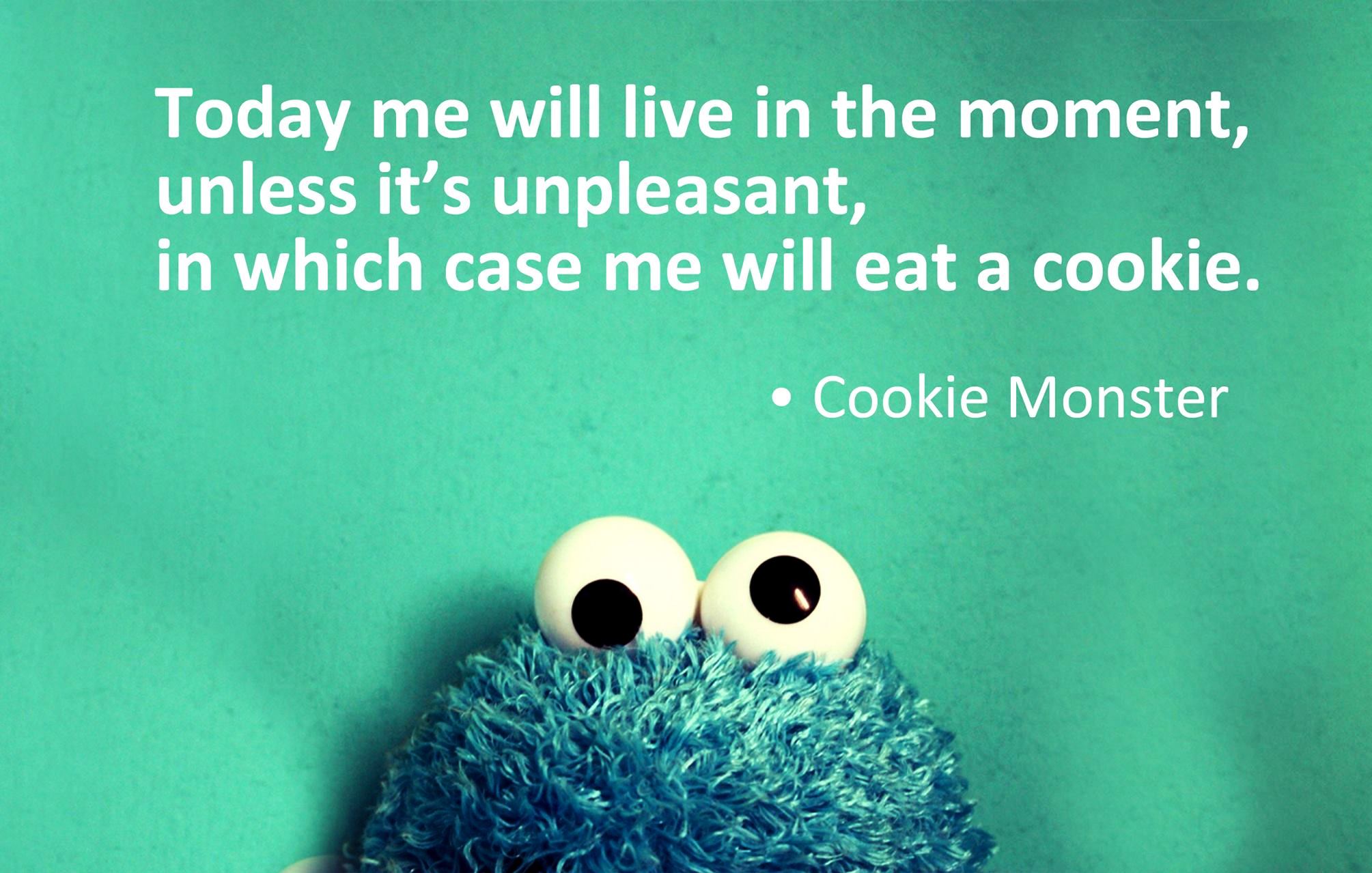
Usually, when we are suffering in some way, we habitually grasp towards things that we know have previously made us feel good. For some of us, the pick-me-up might be eating chocolate, talking to a friend or watching TV. We basically look for anything that will distract us from the unpleasantness that we are experiencing. Many times these techniques can often lift us out of our depression and we can feel mentally balanced, enough to meekly dip our toes back into the world again. However, there are also many times when we continue to feel dissatisfied. Although our chosen forms of escapism may prove effective most of the time, we can see that our ‘infallible pick-me-ups’ aren’t so reliable all of the time.

The reason for this is because objects or activities in themselves have no concrete qualities that are reliable all of the time. For instance, if we are physically sick with a cold and we have an argument with our mother, then grabbing the closest block of chocolate probably won’t send you into bliss, but into wretchedness instead. This is because the chocolate doesn’t have any inherent qualities that make it permanently wonderful. In fact, for dogs, chocolate can be poisonous!

We have to look at what is inside us that makes us want to escape the unpleasant experiences of life? Why are we so afraid to look at the situation, or even challenge it to cause us greater pain? Without having voiced it out loud, we all have a strong inner belief that life should be pleasant, and if it isn’t, then there is something wrong and we need to fix it. However, the Buddha taught in the First Noble Truth, that life is a mixture of pleasant and unpleasant experiences, and that dissatisfaction and unsatisfactory experiences are simply a part of life. So we shouldn’t feel like we’ve failed if things aren’t going so wonderfully. That is just the nature of life.
Read more

Mindfulness: Finding Joy in the Present Moment

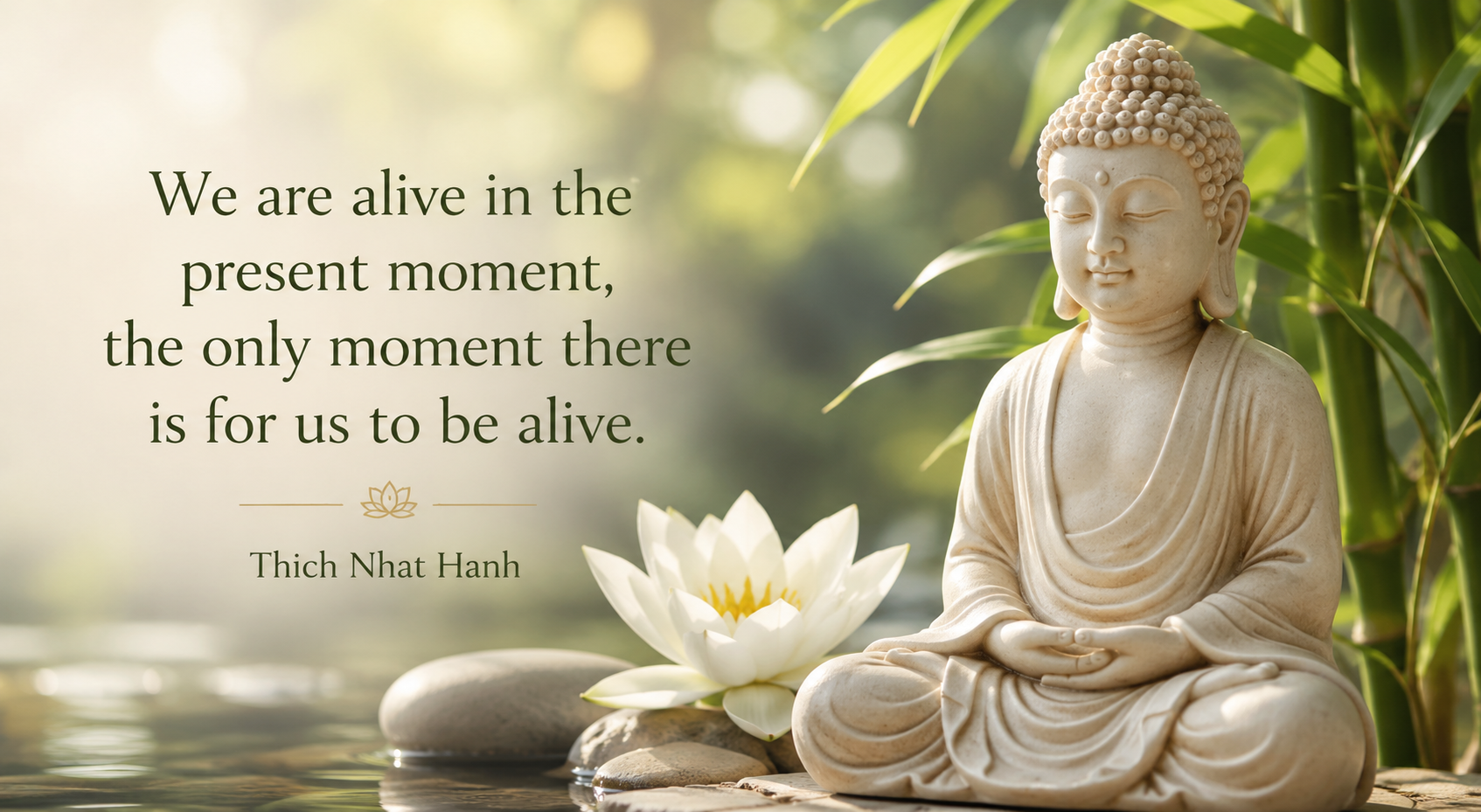
Peaceful Buddha statue beside a lotus flower with a Thich Nhat Hanh quote about living in the present moment

If we examine our days truthfully, most of us would agree that we tend to spend a lot of time operating on autopilot. We’re always making plans, thinking about the future, trying to complete our To-Do lists. We are so busy rushing towards the future and some perceived wonderful event that is more exciting than the present moment, that we don’t actually experience our lives. Eckhart Tolle, author of The Power of Now says, “Most people treat the present moment as if it were an obstacle that they need to overcome. Since the present moment is Life itself, it is an insane way to live.”

How often do we drive somewhere, only to arrive at our destination and not even remember the drive? Or in great anticipation we eat our favorite meal only to realize at the end of it that we didn’t actually taste the flavors at all because we were lost in thoughts about something else? Our days are made up of many seemingly mundane events, e.g. driving, eating, cooking, washing the dishes, etc., yet these are what our days are made of, so surely there must be some way to bring some joy to these activities so we can arrive at happiness now.

Practicing mindfulness is the fastest way to live our lives more fully with happiness and wisdom. The actual practice of mindfulness involves moment to moment awareness of what is happening now, both internally and externally. Internally we become more aware of our body and our mind, while externally we begin to broaden our field of awareness so that we actually take in the external environment as well, leading to a sense of spaciousness, alertness and stillness.

Read more

How to Solve Problems: It’s All About Perspective

One of the great things about Buddhism is its ability to transform anything, and everything, into the path of awakening. In Buddhism, we try to solve all our problems in life by treating them as opportunities to develop spiritual qualities in us that otherwise wouldn’t be cultivated. Often when we have a problem confronting us – that is all we can see – the problem. It’s a dark, ugly tunnel that seems to go on forever and we can’t see any exit out.  This can quickly lead to feelings of frustration, anger, hopelessness, and despondency. But what might look like a disaster to us, from another perspective, could actually be something quite fortunate. In fact, how every situation is perceived is simply a matter of opinion. If everyone else can look at the same situation and view it as something different, then perhaps we can too.

Maybe getting sick isn’t a disaster but a fantastic opportunity for us to slow down and find some balance in our lives. Perhaps losing our job is the shove we need to really find our true calling and follow what we’re really passionate about. Maybe our friend backstabbing us is the wakeup call that we need to find better friends.

The important thing is to recognise that there is nothing that happens in our lives that is inherently bad. There is always a golden nugget to be found in every situation. If a friend or family member is sick, it might seem like the end of the world to us. We feel helpless and their suffering places an extreme emotional toll on our hearts. But in this time of crisis there is an amazing flower that is allowed to grow, and that’s the blossoming of our generosity, love and compassion. Spiritual qualities often need an external trigger for them to be cultivated. And there’s nothing better than using our own difficulties in our lives as ingredients for cultivating these spiritual qualities.

Read more